
A spoonful of cod liver oil in winter – for earlier generations in Switzerland and across northern Europe, this was as natural as muesli for breakfast is today. For a long time the oil seemed old-fashioned; today it is enjoying a quiet renaissance – not as a remedy, but as a traditional food from the northern seas. Time to take a closer look at what cod liver oil actually is and why the way it is produced makes such a big difference.
What cod liver oil is
Cod liver oil is the oil from the fresh liver of the Atlantic cod (Gadus morhua). It is traditionally produced where cod migrate to the coast in winter to spawn: in the cold waters of Norway. The Norse seafarers already used the oil, and in the 19th century the brown bottle stood in almost every European pharmacy. The notorious taste of those days, however, came less from the oil itself than from the way it was stored back then – fresh, gently extracted cod liver oil tastes surprisingly mild and slightly maritime.
Traditional and industrial production
Most cod liver oil on supermarket shelves today is an industrial product: the livers are heated, and the oil is refined, bleached and deodorised. Natural accompanying compounds are lost in the process; vitamins are often added back afterwards in synthetic form.
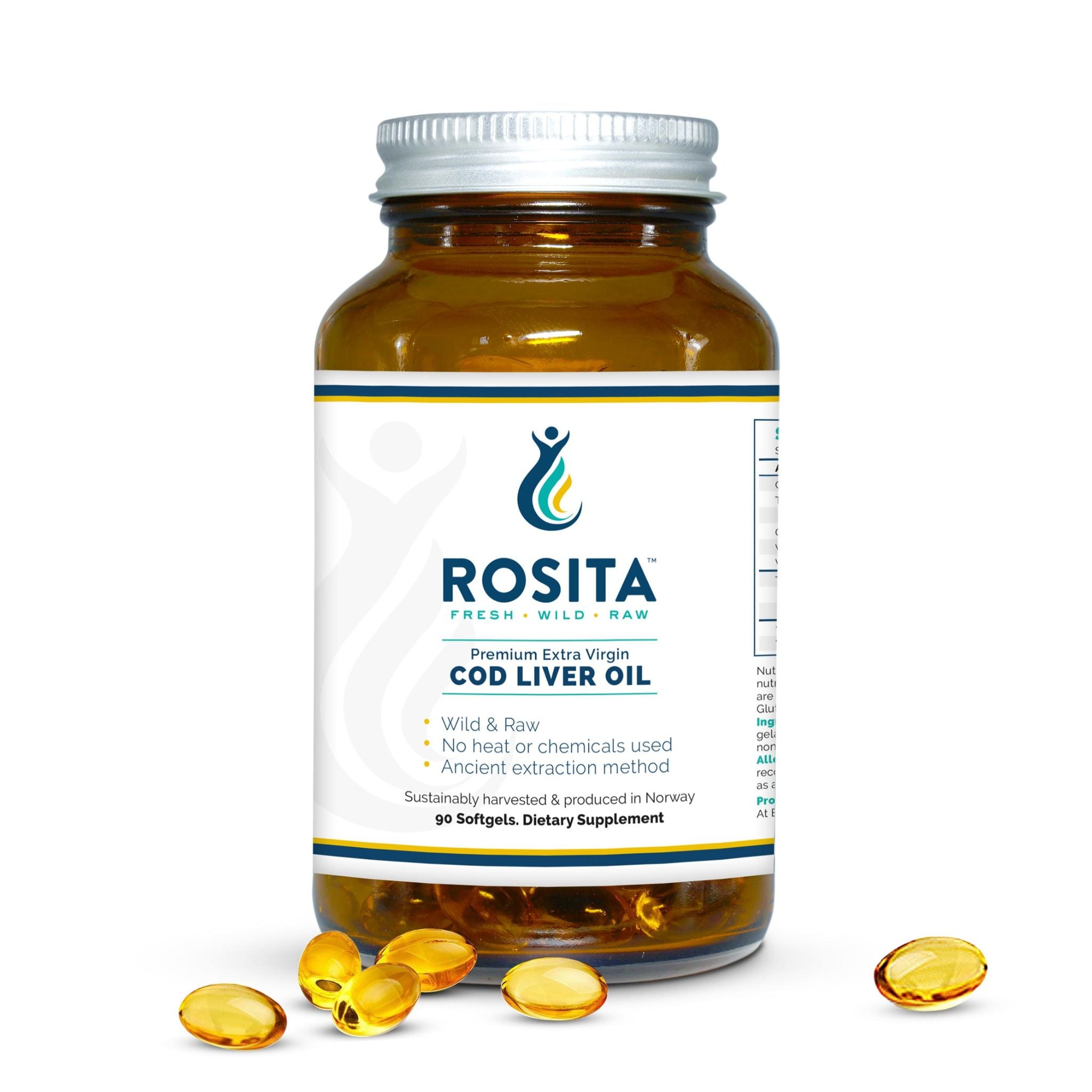
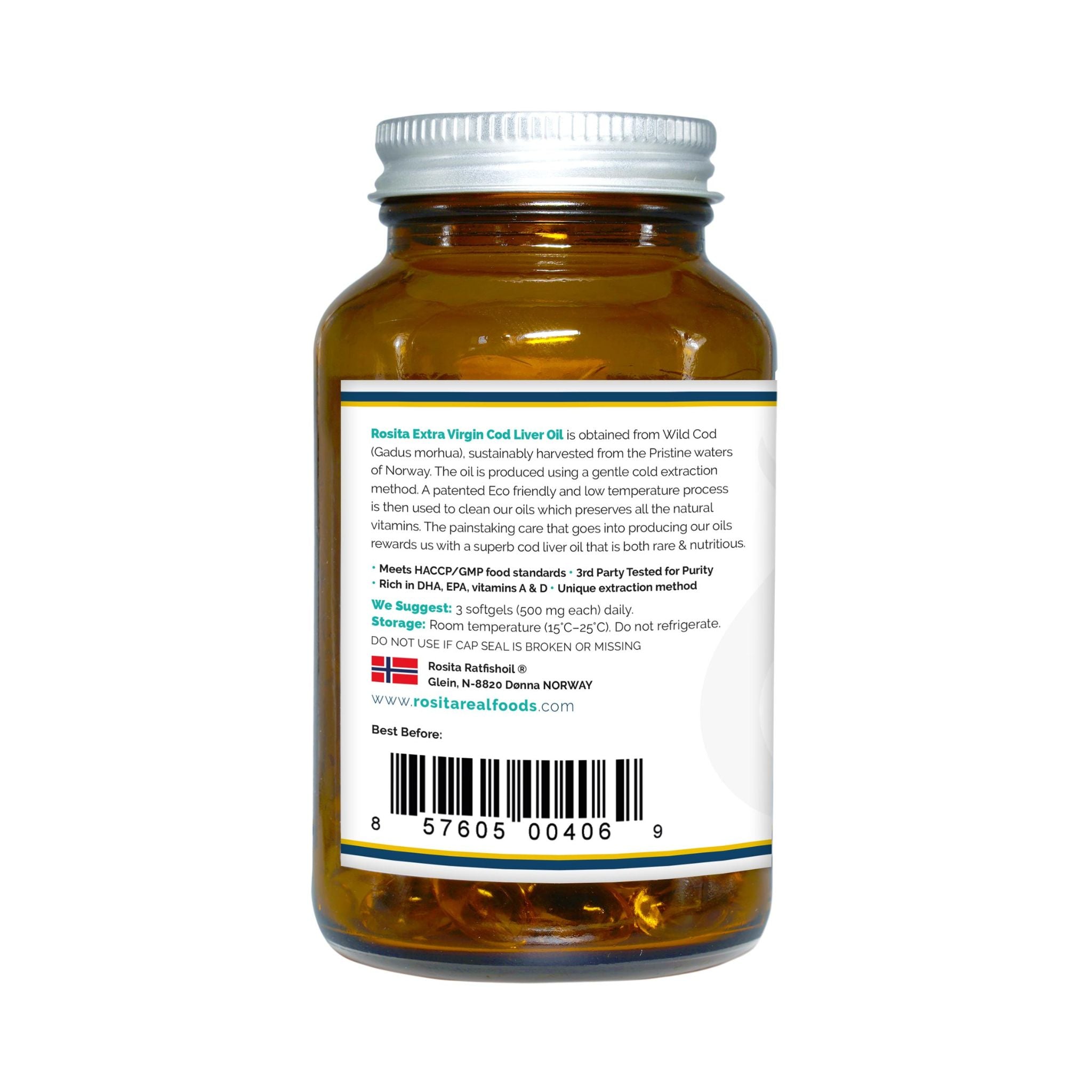
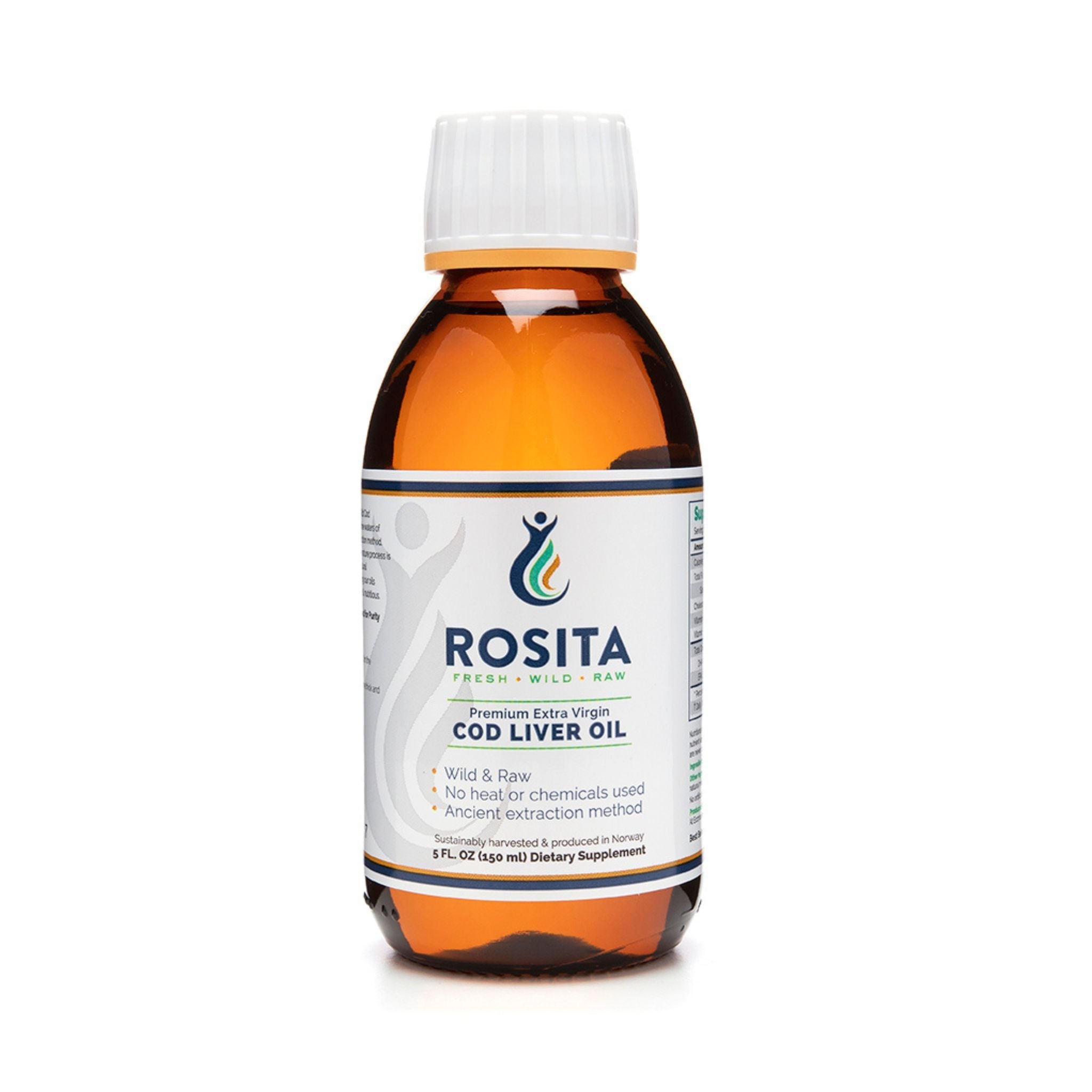
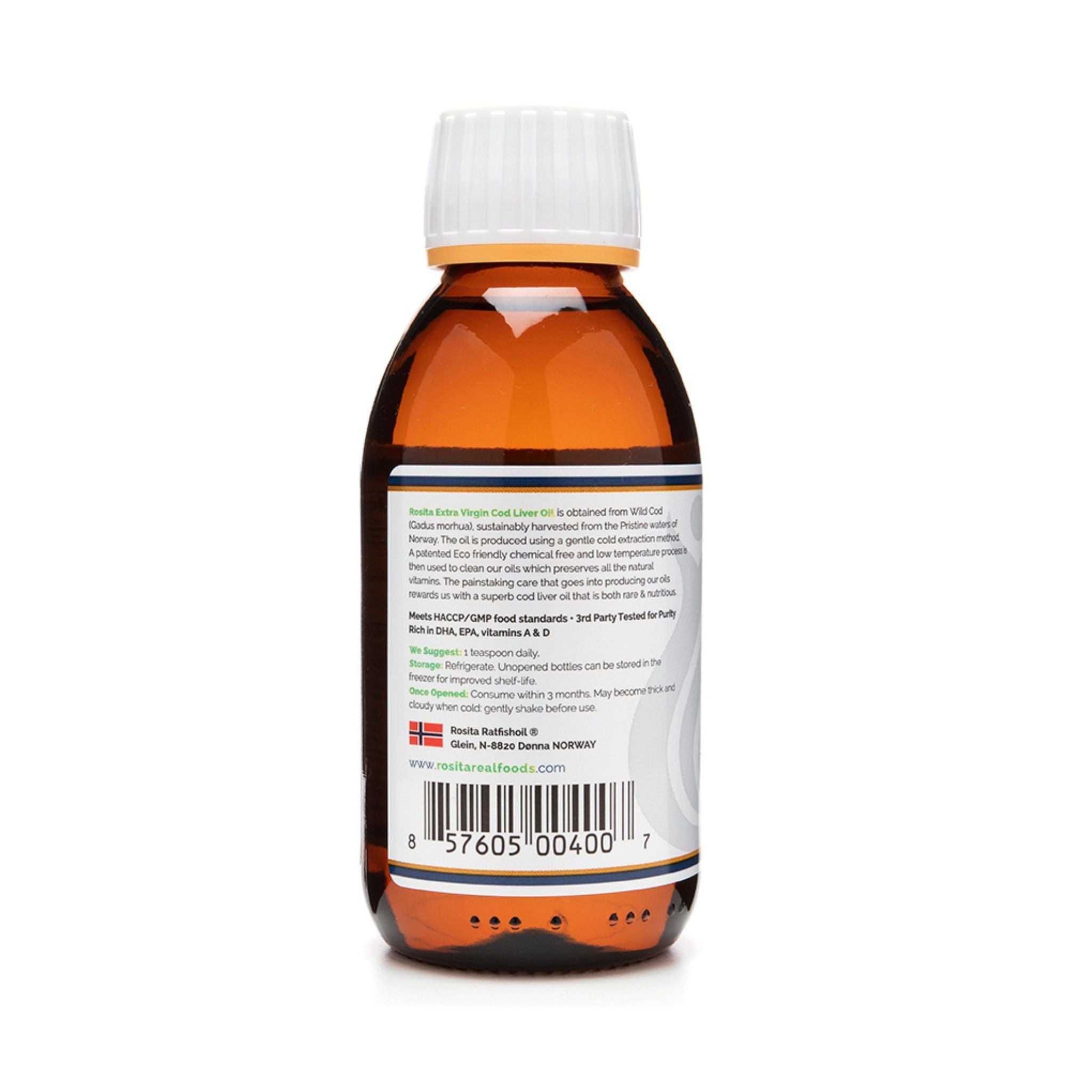
The counter-model is Extra Virgin Cod Liver Oil (EVCLO) from the Norwegian producer Rosita: the oil is extracted by hand in small batches – without heat, without chemicals, without industrial refining. It thus remains unprocessed, with everything that is naturally present in the cod liver. Every batch is independently tested for heavy metals, impurities and oxidation values, and bottled under nitrogen to preserve freshness.
What it naturally contains
Unrefined cod liver oil contains the long-chain omega-3 fatty acids DHA and EPA as well as the fat-soluble vitamins A and D in their natural form. Half a teaspoon (2.5 ml) of Rosita EVCLO provides around 500 mg of omega-3 fatty acids, of which about 250 mg DHA and 200 mg EPA. The only additions are a trace of rosemary extract and natural vitamin E – together less than 0.1% – to protect the oil from oxidation.
What to look for when buying
The most important criterion is the degree of processing: has the oil been heated and refined, or is it raw and unprocessed? Reputable producers publish batch tests and declare whether vitamins have been added afterwards. Your nose helps too: fresh cod liver oil smells mildly of the sea – a sharp, rancid smell points to oxidised oil. Once opened, liquid cod liver oil belongs in the fridge and should be used within about three months; if you dislike the taste, choose taste-neutral capsules made from fish gelatine.
Cod liver oil at Montcalia
We stock Rosita EVCLO in two forms: liquid in the 150 ml bottle – kept refrigerated at all times and, for freshness reasons, never shipped on Fridays or before public holidays – and as capsules in packs of 90 for on the go. Both are also available as a three-pack with a 15% price advantage: liquid and capsules. You will find more products from the northern seas in our cod liver oil category.
Good to know
Cod liver oil contains fat-soluble vitamins that can accumulate in the body – so stick to the recommended serving and do not casually combine it with other products containing vitamin A. Pregnant and breastfeeding women, as well as anyone taking medication, are best advised to discuss use with a qualified professional beforehand. Food supplements are no substitute for a varied diet.