
«Adaptogen» is not a protected term and not a class of active substances in any regulatory sense. The word comes from Soviet plant research: the pharmacologist Nikolai Lazarev coined it in the 1940s for plants meant to help the organism cope non-specifically with strain. Today it is used broadly and rather freely in the supplement trade. This article sets out which plants and mushrooms are traditionally counted among them.
Where the term comes from
Lazarev and later Israel Brekhman set out three criteria: the plant should act non-specifically, should not push the organism's balance in one direction, and should have as little intrinsic effect of its own as possible. That definition predates modern efficacy research and has to this day not been translated into any authorised health claim. For foods and supplements, health claims are permitted in Switzerland and the EU only once they have been assessed and approved – which is not the case for the classic adaptogens. So we write what is in a product and where it comes from, not what it is supposed to do.
The classic plants
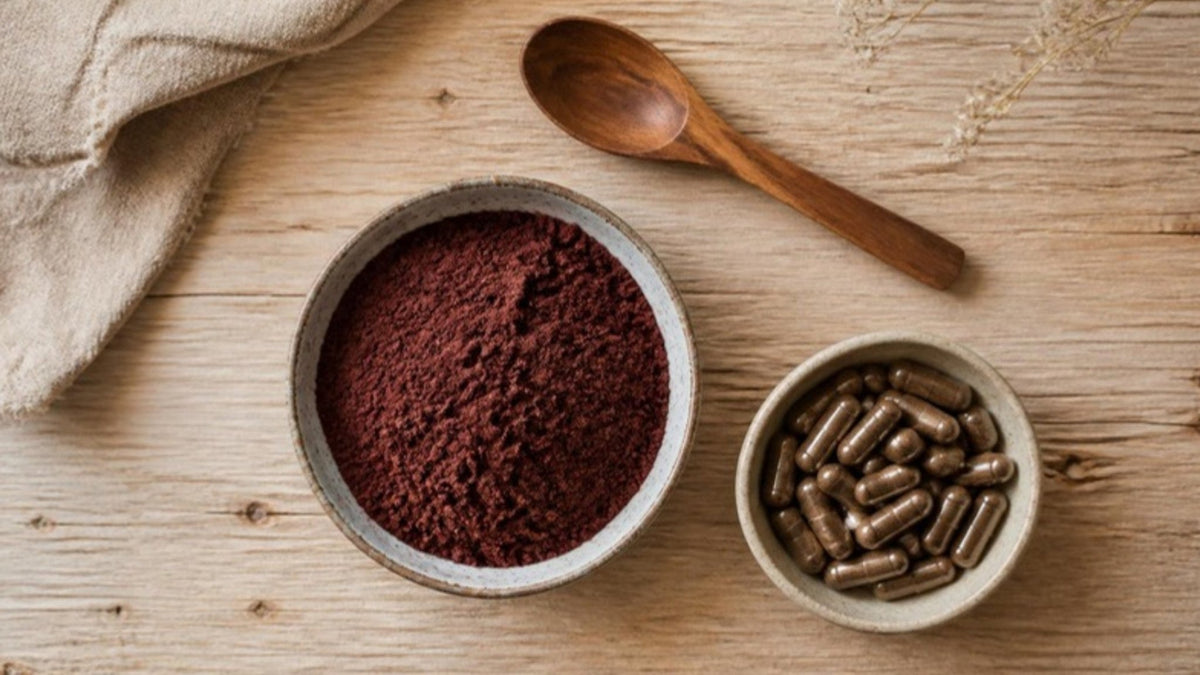
Ashwagandha (Withania somnifera), also called winter cherry, is the best known and has long been used in Ayurveda. We carry it as organic root powder in plant-based capsules.
Rhodiola rosea, roseroot, grows in arctic and alpine regions and belongs to the Scandinavian and Russian tradition. We carry it as an extract at 500 mg per capsule.
Shilajit is strictly speaking not a plant but a resinous mass from high-mountain rock crevices, rich in humic substances. More on it in Shilajit: origin, fulvic acid and what the label should say.
Gotu kola (Centella asiatica) comes from Ayurvedic and traditional Chinese use, moringa from India and East Africa.
The mushrooms
Several functional mushrooms are counted among the adaptogens as well: reishi, cordyceps, shiitake and lion's mane. What you can actually check with mushrooms – fruiting body or mycelium, powder or extract – is set out in Functional mushrooms: the five classics.
What to look for when buying
- Plant part: with ashwagandha the root is the traditionally used part, not the leaf.
- Powder or extract: powder is the milled raw material, an extract is concentrated – both legitimate, but not the same thing.
- Additives: fillers and anti-caking agents are not necessary with these raw materials.
- Origin and organic: roots and barks take up whatever is in the soil.
Related categories
The whole range sits under Adaptogens; the mushrooms also under Functional Mushrooms and thematically under Stress & Sleep.
Note
Food supplements are not a substitute for a varied diet. Do not exceed the stated daily intake. If you are pregnant or breastfeeding, have a pre-existing condition or take medication, seek medical advice before use.