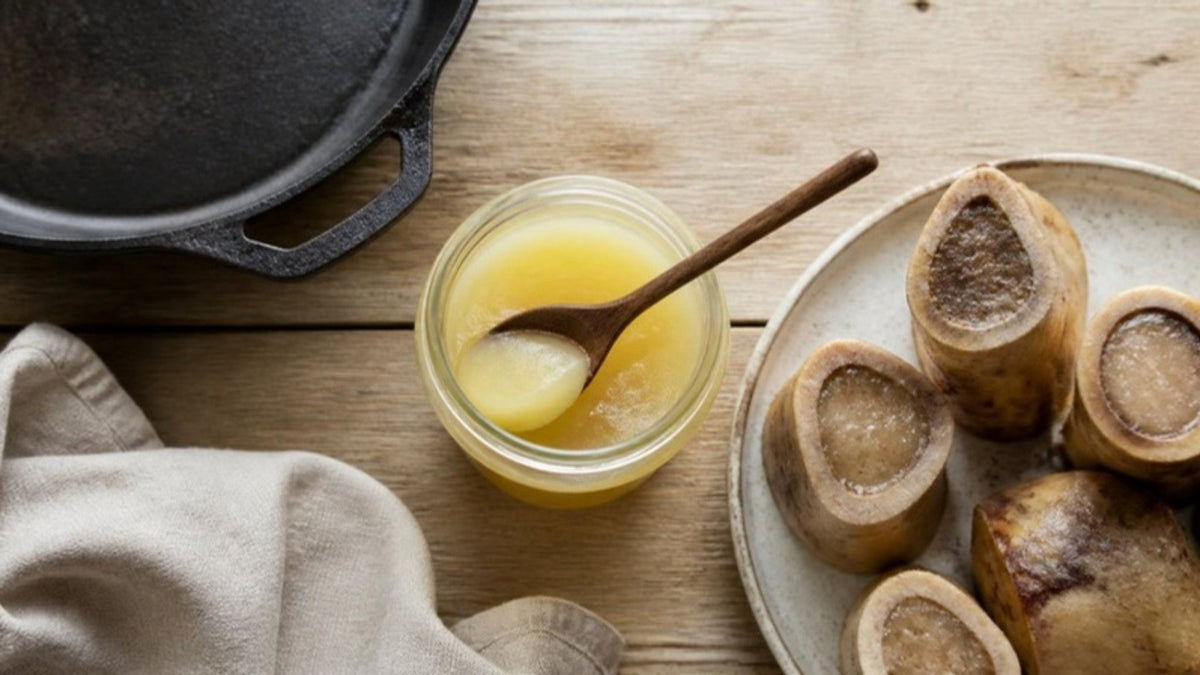

Collagen is the most abundant protein in the body of vertebrates – it forms the scaffold of skin, bones, cartilage, tendons and ligaments. In the kitchen you meet it more often than you think: every broth that sets in the fridge does so because of the collagen released from bones and connective tissue during simmering. This article explains what collagen powder is made from, what the terms on the labels mean and how our products differ.
What collagen is
Collagen consists of long protein chains twisted into triple helices – hence its tensile strength. Its amino acid profile is characteristic, with plenty of glycine, proline and hydroxyproline; the latter occurs in meaningful amounts almost exclusively in collagen. Tryptophan, however, is missing – collagen is therefore not a complete protein and does not replace other protein sources; it complements them.
Gelatine, hydrolysate, peptides: the same raw material three times
These terms describe processing stages, not different raw materials. When collagen is heated in water for a long time, gelatine forms – it sets as it cools, as with a Sunday roast. If the protein chain is broken down further with enzymes, the result is hydrolysed collagen, also called collagen peptides: short fragments that dissolve in cold as well as warm water and no longer gel. For coffee, smoothies and cold dishes, hydrolysate is therefore the practical form; for cooking and aspic, gelatine.
The source determines the type
Collagen is classified into types. Skin and bones from cattle and fish mainly provide types I and III; cartilage – from chicken, for instance – type II. More important in practice than the type number is the origin: collagen is an animal product, and what the animal took in ends up in the raw material. That is why every one of our products states which animals it comes from – the same principle as with the organs.
Our collagen products compared
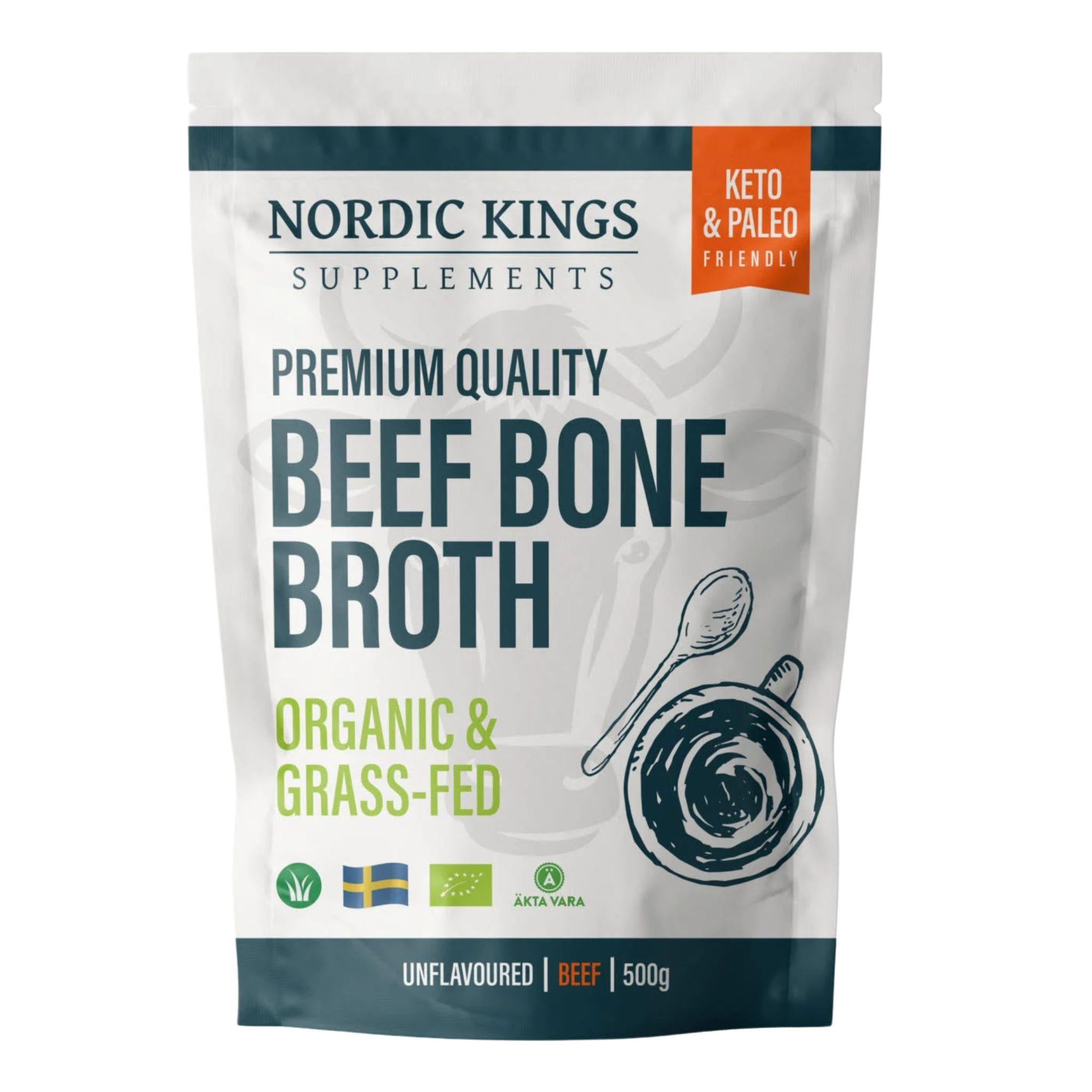
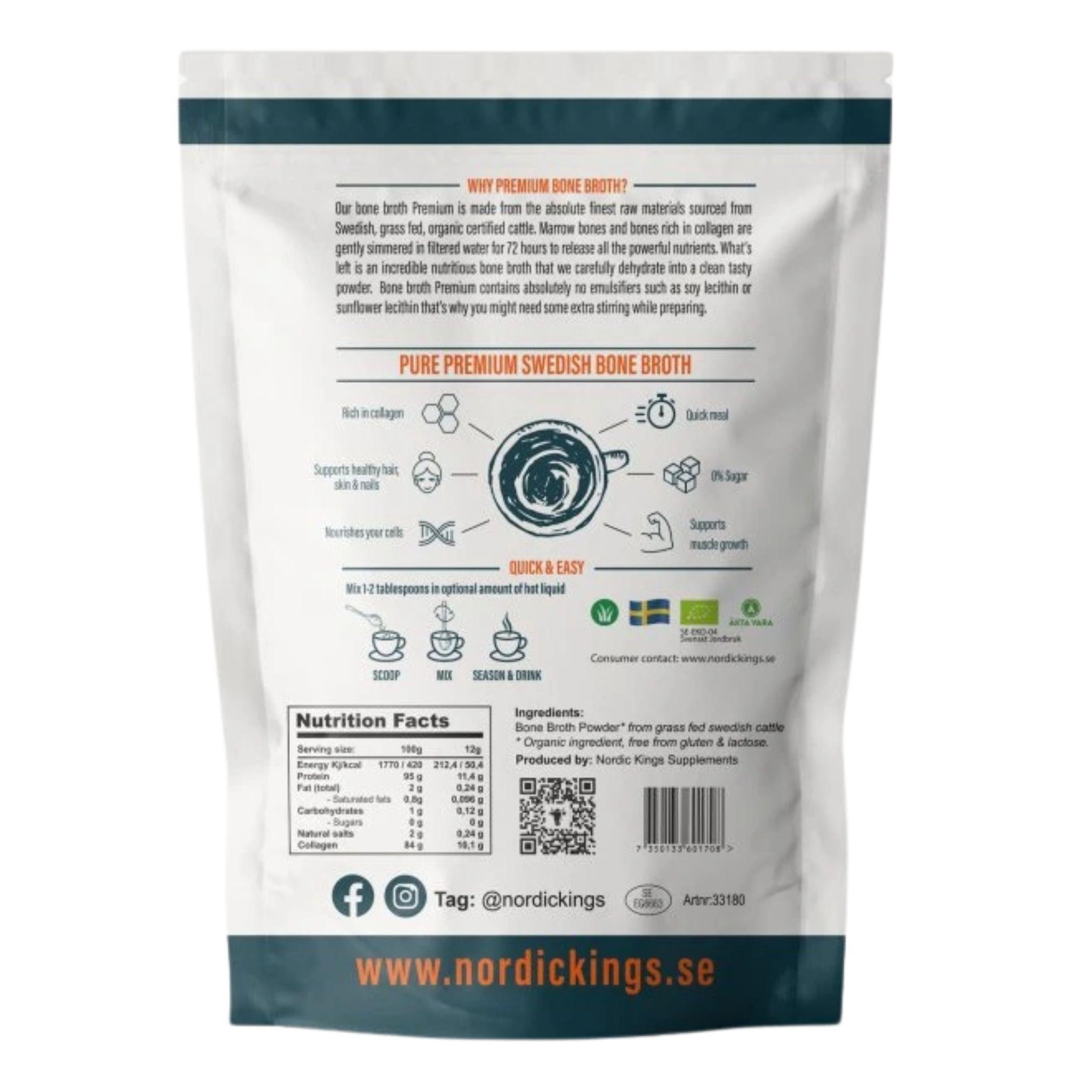
- Organic bone broth collagen powder – long-simmered bone broth from Swedish grass-fed cattle to organic and KRAV standards, gently freeze-dried, with around 84 g of collagen per 100 g. Tastes like broth and suits soups, sauces and savoury drinks.
- Great Lakes collagen peptides – hydrolysed collagen from grass-fed cattle, taste-neutral and cold-soluble. The form for coffee, tea and smoothies.
- Fish collagen powder – hydrolysed collagen from MSC-certified wild catch, likewise neutral and cold-soluble. The choice for anyone who prefers not to use beef. What the MSC label checks is explained in Organic, KRAV, MSC and wild harvesting.
The bone broth collagen powder is also available as a three-pack at 15 % off.
What to look for when buying
- Origin of the animal: pasture-raised or wild-caught, with a verifiable standard – organic, KRAV or MSC.
- Ingredient list: collagen needs no flavourings, sweeteners or anti-caking agents. One ingredient is enough.
- Processing form: hydrolysate for cold uses, broth powder for savoury cooking – depending on how you want to use it.
- Lab testing: as an animal concentrate, collagen should be tested for contaminants; ask if no information is given.
Related categories
All products sit under Collagen and Bone Broth, thematically under Skin, Hair & Nails and Bones & Joints.
A note
Collagen is an animal protein and not suitable for a vegan diet; fish collagen is not suitable for anyone with a fish allergy. Food supplements are no substitute for a varied diet. Do not exceed the stated daily dose. In pregnancy, while breastfeeding, with pre-existing conditions or when taking medication, seek medical advice before use.